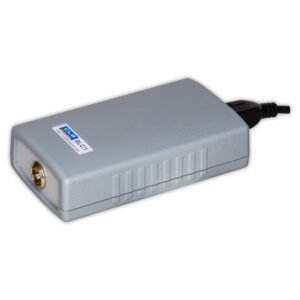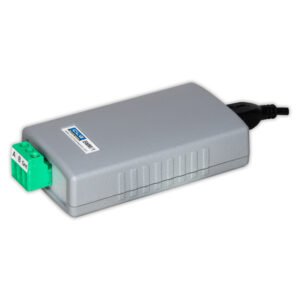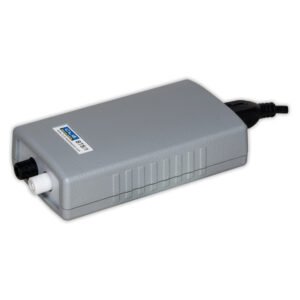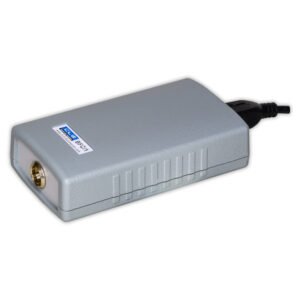
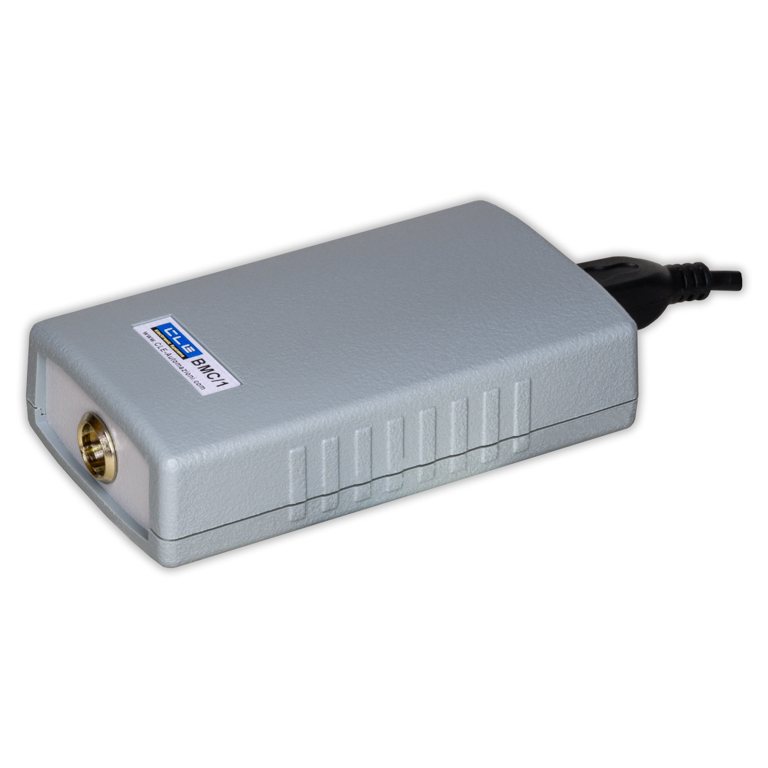
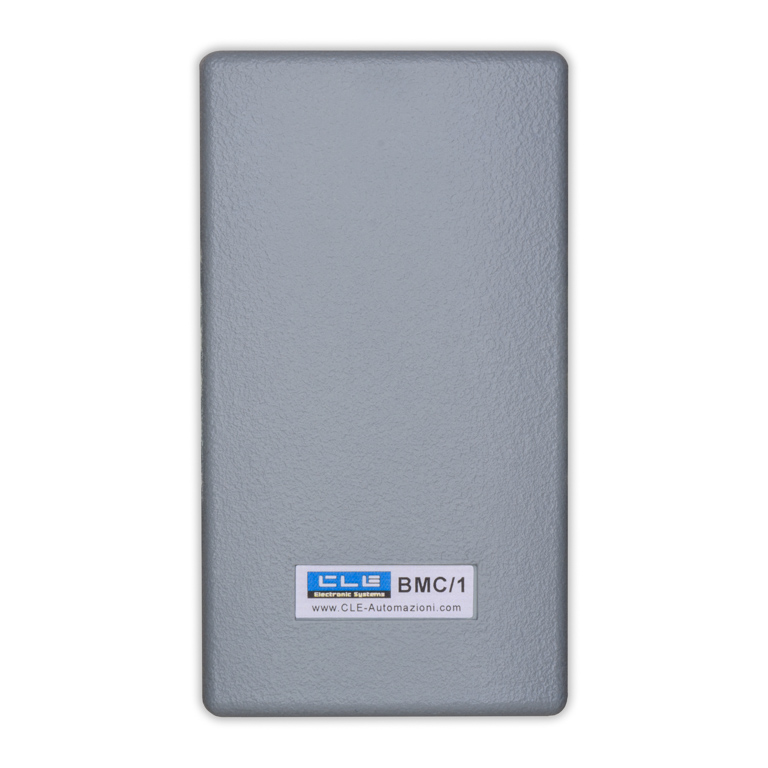
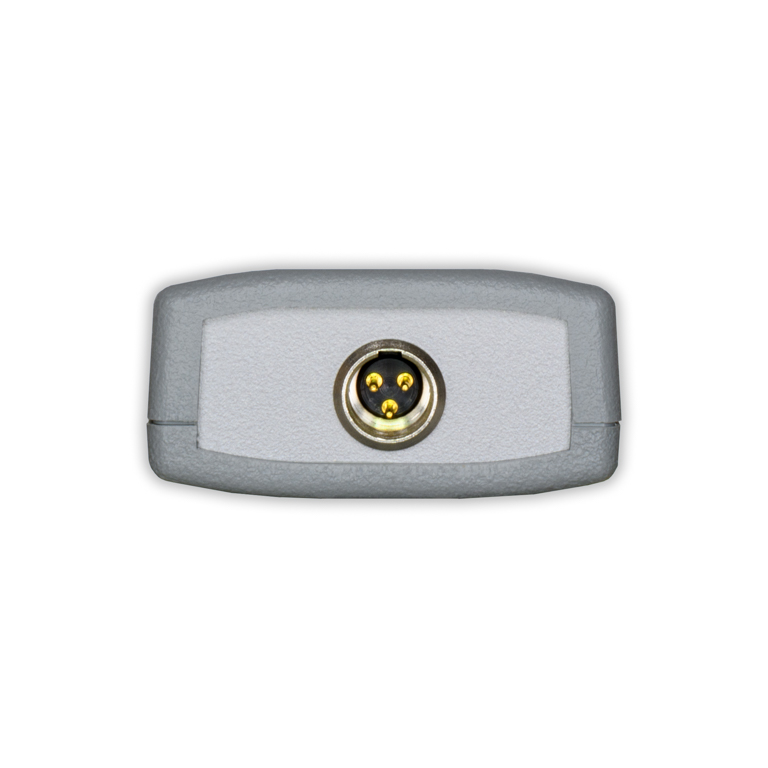

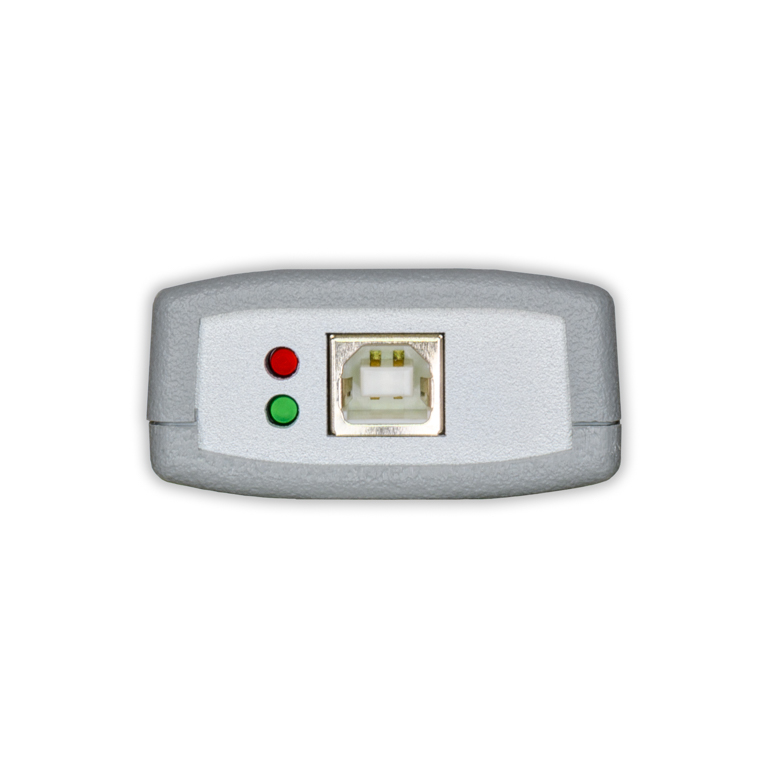
BMC/1 is a USB RS485 XLR converter, self-powered at 5 V via the USB port. It can be used to enable a PC to communicate with an RS485 bus device or network.
It is completely protocol-transparent, so it can be used with Modbus or any proprietary protocol that operates on an RS485 bus.
This USB RS485 XLR converter appears on the PC as a virtual RS232 port (VCP, Virtual COM Port) and can be used by any program installed on the PC.
This USB RS485 XLR serial adapter operates in half-duplex mode and automatically detects data direction and baud rates up to 250 kbps, so it can be easily installed in any new or existing system. The operating system usually recognizes the device and automatically installs the necessary drivers; if not, the drivers can be downloaded from this link.
Technical specifications
| Power supply | USB |
|---|---|
| Power consumption | 1 W |
| Serial transmission data rate | 0 - 250 kbps (automatic) |
| Connector | USB type A |
|---|---|
| Technology | USB 2.0, USB 1.1 |
| Interface type | VCP (Virtual COM Port) based on RS232 |
| Data direction | Full Duplex |
| Supported operating systems | Windows 98 and above, Mac OS 8 and above, Linux |
| Communication type | Half Duplex on balanced line |
|---|---|
| Data direction | Automatic |
| Maximum bus voltage | ± 42 V DC |
| Common mode range | ± 25 V DC |
| ESD protection | ± 15 kV (Human Body Model) - ± 8 kV IEC 61000-4-2 contact |
| Surge protection | Integrated TVS: ± 3 kV IEC 61000-4-5 (surge) - ± 4 kV IEC 61000-4-4 (EFT) |
| Slew rate | Limited, to have an error-free transmission |
| Dimensions | 90 mm x 50 mm x 25 mm |
|---|
| Degree of protection | IP20 |
|---|---|
| Operating temperature | -20 °C to +50 °C |
| Storage temperature | -40 °C to +80 °C |
Full description
BMC/1 is a USB RS485 XLR converter, self-powered via the USB port at 5 V. It can be used to enable communication between a PC and an RS485 serial bus. The converter is powered via the USB port, so there is no need for an external power supply, so installation is very simple.
The operating system usually recognizes the device and automatically installs the necessary drivers; if not, the drivers can be downloaded from this link. The USB RS485 converter appears on the PC as a virtual RS232 port (VCP, Virtual COM Port) and can be used by any program installed on the PC. The USB RS485 XLR converter operates in half-duplex mode and automatically detects data direction and baud rates up to 250 kbps, so it can be easily installed in any new or existing system.
Read moreShow less
Use cases
A USB RS485 XLR converter is typically used to enable a PC to communicate with an RS485 serial network or to program a device via the RS485 bus. To protect the PC from power surges in the network, you can use an isolated USB RS485 XLR converter such as BLC/1.
In a network with heavy electromagnetic interference, which is common in industrial environments, it is good practice to install two or more opto-electrical converters to ensure signal integrity. There are also environments where electrical equipment is prohibited, such as swimming pools, saunas, and buildings at risk of fire, where fiber optics therefore become necessary.
Protocol
BMC/1 USB RS485 XLR converter is completely protocol-independent. This means that the converter is transparent to the communication and can be used with protocols such as Modbus, BACnet, or any proprietary protocol.
This is possible because the converter operates at the logic level rather than at the protocol level. Therefore, this USB RS485 XLR converter can also be used in complex networks where multiple protocols are present simultaneously on the same RS485 bus.
Ease of installation
With a modern operating system, USB drivers are usually installed automatically once the device is connected to the PC. From a software perspective, therefore, this USB RS485 XLR converter is fully Plug & Play. If the PC is unable to communicate with the device, it is often sufficient to install the drivers manually, but we are, of course, available to provide support for resolving configuration issues.
Versatility
This USB RS485 XLR converter is also available with an RS485 serial interface isolated up to 560 V, with other combinations of serial standards, or with different connectors. BLM/1 and BMM/1 converters, for example, use removable screw terminals, with isolated and non-isolated RS485, respectively. BTS/1 and BTV/1 feature synthetic or glass fiber optic connectors to provide additional isolation from electromagnetic interference.
BFM/1 and BFC/1 industrial serial converters operate with the RS422 standard, featuring either removable terminals or 5-pin Mini XLR connectors. All combinations of serial standards, fiber optics, and power supply options are available in the catalog; however, special requests (such as higher data rates) can be made via the contact form.